Choosing a Greener Holiday: Why We Said Goodbye to Reindeer Moss
10th Mar 2026
If you’ve walked through the Maine woods or hiked along our rocky coast, you’ve likely seen it: a pale, puffy, sponge-like carpet tucked between the blueberry bushes and spruce seedlings. Many call it "Reindeer Moss," though it isn't actually a moss at all. It's a lichen—a miraculous partnership between fungus and algae—and for decades, it's been a staple in the world of holiday decorating.
At Harbor Farm, we have always prided ourselves on using native Maine materials. However, part of being good stewards to the land we love means listening to its needs. After much research and soul-searching, we made a major decision: Harbor Farm no longer uses harvested Reindeer Moss in our wreaths. Here is why we made the switch to a more sustainable material.
A Miracle of Slowness (And Why Harvesting Hurts)
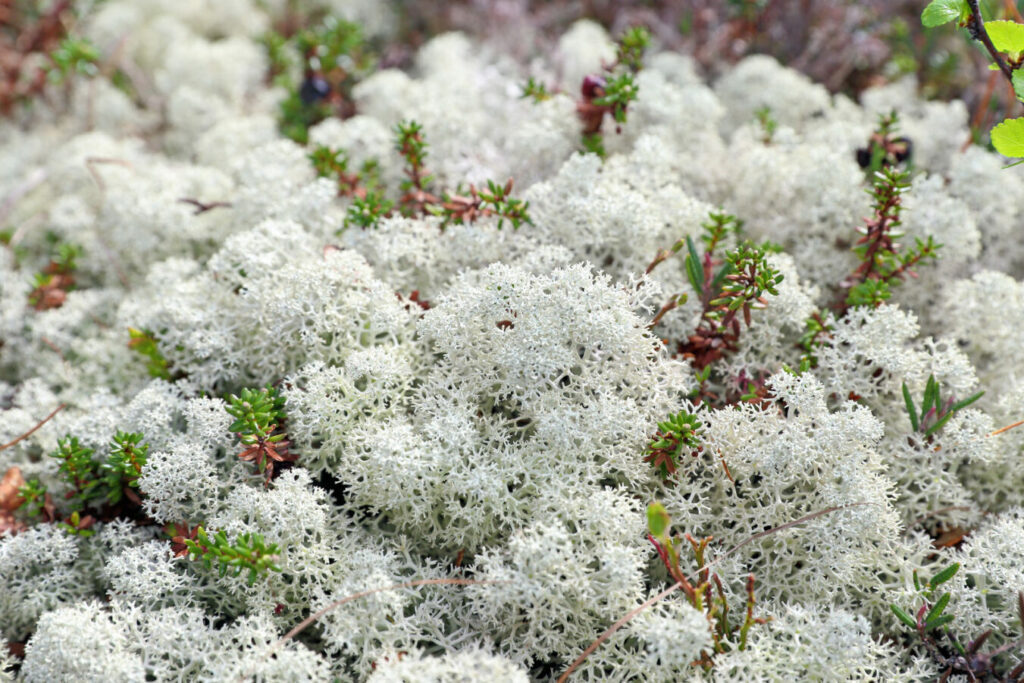
Reindeer lichen (Cladonia rangiferina) is a hardy survivor. It can photosynthesize in freezing temperatures and absorb water directly from the misty Maine air. But its greatest strength is also its greatest vulnerability: it grows very, very slowly.
On average, Reindeer Moss grows only 0.2 to 0.4 inches per year. A single patch the size of your hand can take over a decade to establish. Because it takes so long to mature, large-scale harvesting for the floral industry can leave the forest floor barren of the lichen for decades. In an era where climate change and wildfires are already putting pressure on Maine’s lichen and forest ecosystems, we decided that the impact was simply too great to continue harvesting Reindeer Lichen for our products.
The Importance to the Ecosystem
As its name suggests, this lichen is a primary winter food source for reindeer and caribou in regions where these animals are found. But even here in Maine, where these animals are not native, it plays a vital role. It provides nesting material for local birds and mammals, and serves as a micro-habitat for important beneficial insects. Lichens are also "bio-indicators", which means they are highly sensitive to air pollution and their well-being can indicate the quality levels of the air and water where it grows, as well as helping to clean the air in its home forests through photosynthesis. When we protect our lichen mats, we are protecting the air quality and soil health of the Downeast region we call home.
The Sustainable Solution: German Statice
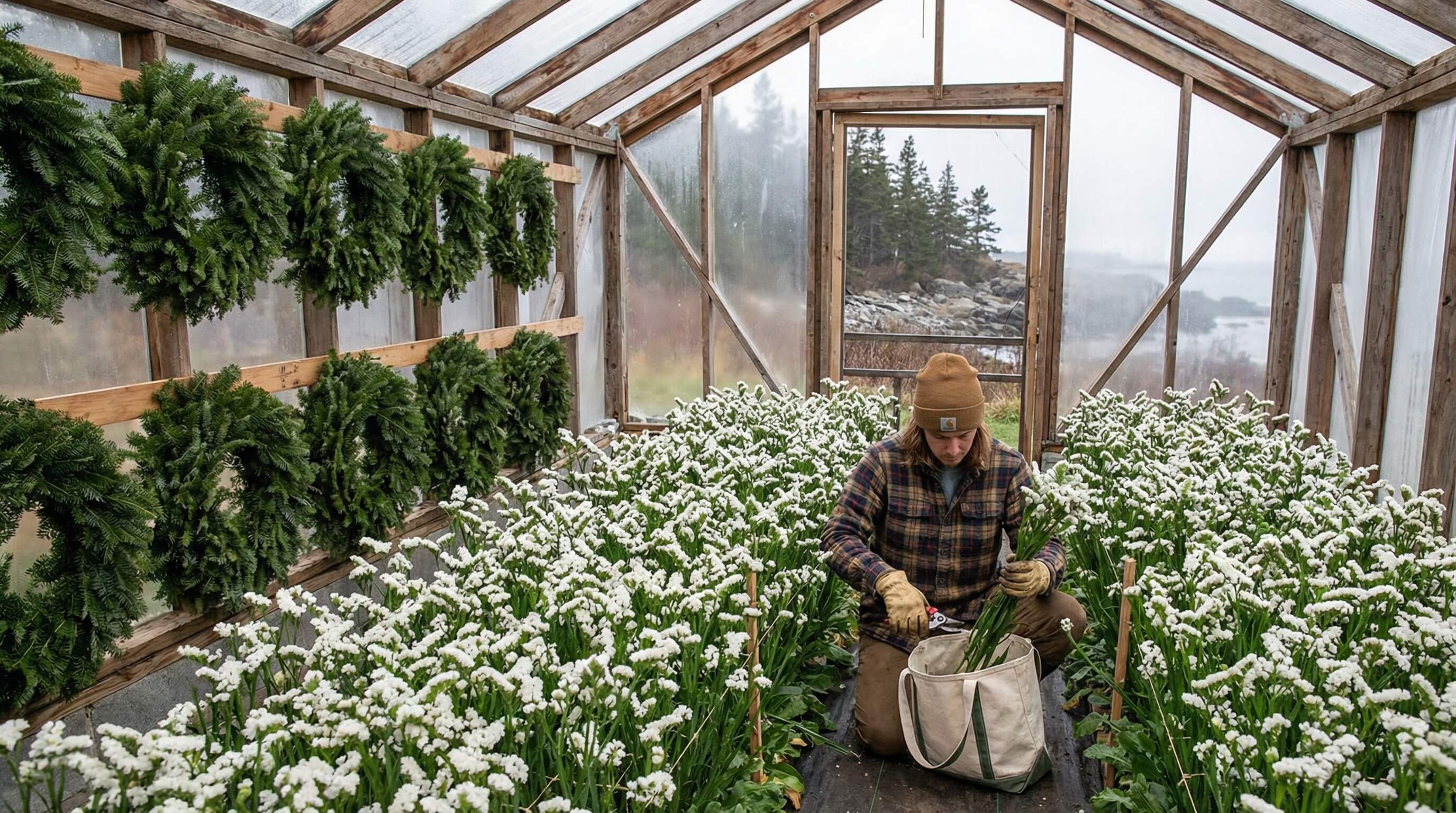
 We knew we wanted to keep the beautiful, airy, and "puffy" aesthetic that Reindeer Moss provided, but we needed a unique material that was kind to the environment. Luckily, we found our hero in German Statice.
Unlike the wild-harvested lichen, Statice is a cultivated flower that can be grown sustainably year after year. It offers a stunning, delicate white texture that mimics the look and feel of the Maine woods without the environmental footprint.
Why we love Statice for your wreath:
- Sustainability: It’s a renewable crop, not a slow-growing wild organism.
- Durability: Statice holds its shape and bright white color beautifully throughout the winter weather.
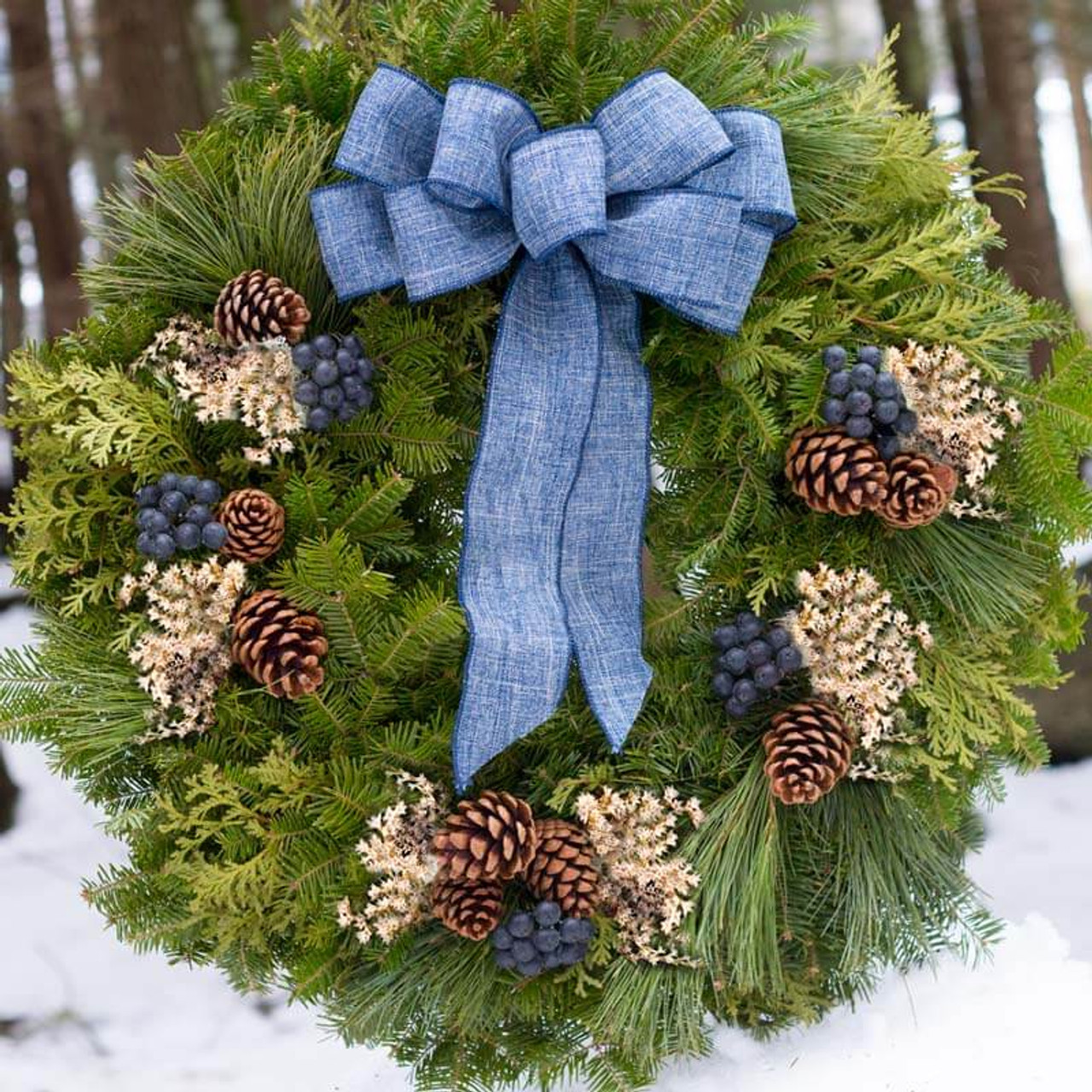
- Aesthetics: It provides that classic "frosted" look that pairs perfectly with our fresh balsam and hand-tied bows.
Craftsmanship That Respects Nature
Moving away from Reindeer Moss is just one way we are ensuring that Harbor Farm remains a steward of the Maine coast for another forty years and beyond. We want you to feel as good about the impact of your wreath as you do about the beauty of your wreath, just like we do.
When you hang a Harbor Farm wreath this year, you’re hanging a piece of Maine that supports local makers, respects slow-growing ecosystems, and celebrates the holidays with a clear conscience.