Gathering in the Woods: Foraging for Spring Edibles in Maine
8th Apr 2026
From the Earth to Your Table: How to Enjoy Maine's Natural Bounty in Spring
Spring is here and with that comes the promise of fresh green plants and funky fungi, many of which we can use for food! Maine has a ton of wild edible plants and fungi that are fun to forage and delicious to eat! Cultures around the world have harvested wild plants for nourishment and medicine for as long as humans have existed. In North America, including Maine, foraging is a traditional food sourcing custom for many Indigenous groups, and an important part of their cultures. Many people today are fairly disconnected from the land they live on and the sources of the foods they eat, but foraging can help to reconnect with these things, while being fun and exciting all at once! Here's a few examples of some Spring foragables to get you out in the woods.
Plants
Springtime is bursting with new life as green buds appear on trees and small plants begin to emerge from the recently thawed soil. Here are a few wild plants that you can add to your family's table this season.
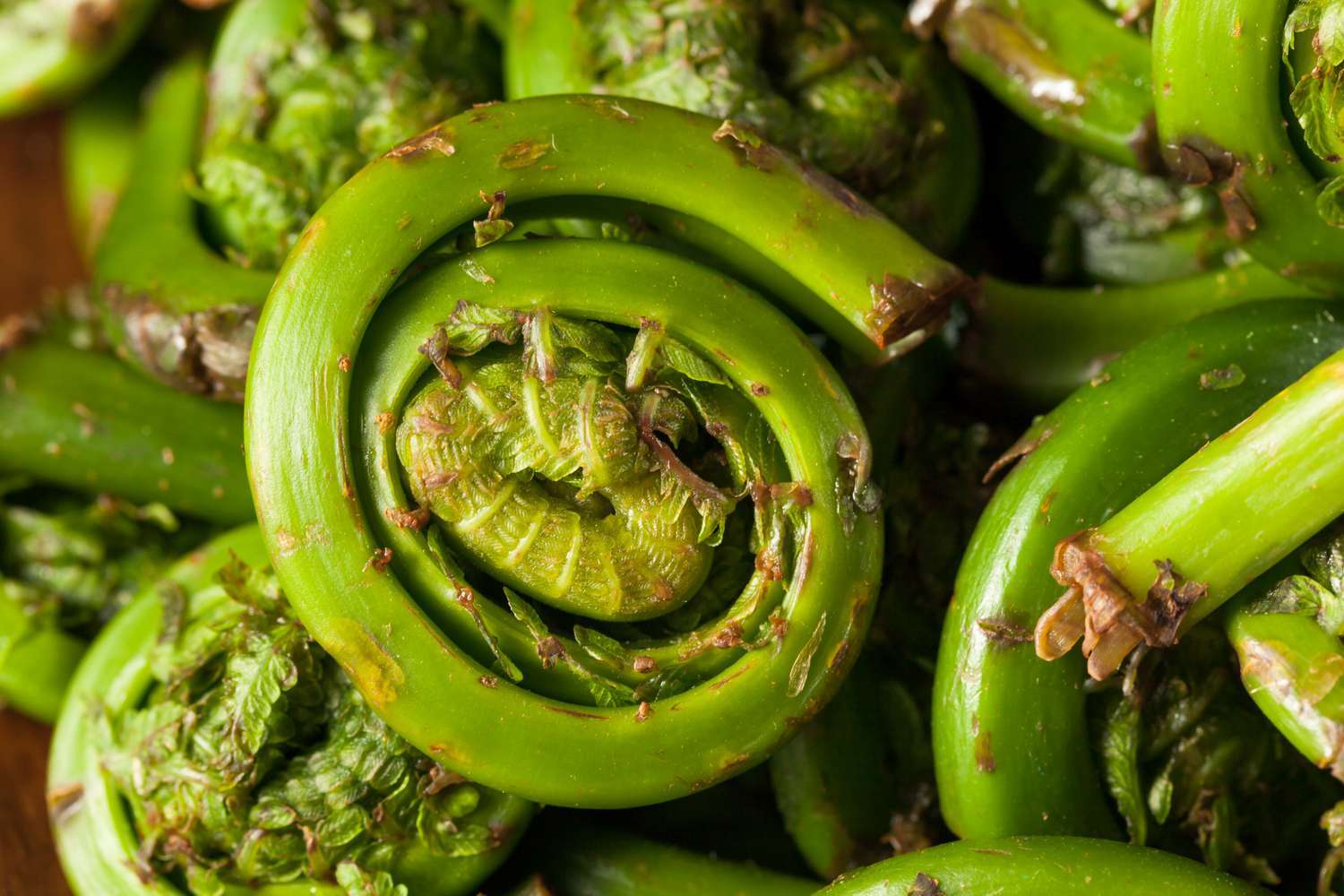
Fiddleheads
Fiddleheads are the young new shoots of the Ostrich Fern (Matteuccia struthiopteris) that emerge in low-lying wetland areas in spring (typically April-May) in many places in the Northern Hemisphere and around the world, including our home state of Maine. These tender, bright green coils are harvested and used as a spring vegetable that has a flavor and texture somewhat reminiscent to asparagus, and are considered a delicacy across areas of the rural Northeastern U.S. While most fern species' immature shoots are edible, the ostrich fern is the most widely cultivated, foraged, and eaten of them all. Fiddleheads can be sauteed, added to soups, and used in a variety of other ways. Some cultures, including some Indigenous American tribes, even use them medicinally! Look for "crowns" of growth with at least 2 inches of bright green stalk with a deep "u" shaped groove, a tightly wound "fiddlehead" shaped coil on top, and a papery brown covering on some parts of the plant. If all these ID points are not present, it is a different species and caution should be exercised. Always remember to forage responsibly-- only take from crowns that have at least 3 fronds, and leave more than you take to make sure there continue to be fiddlehead ferns for generations to come.
Ramps
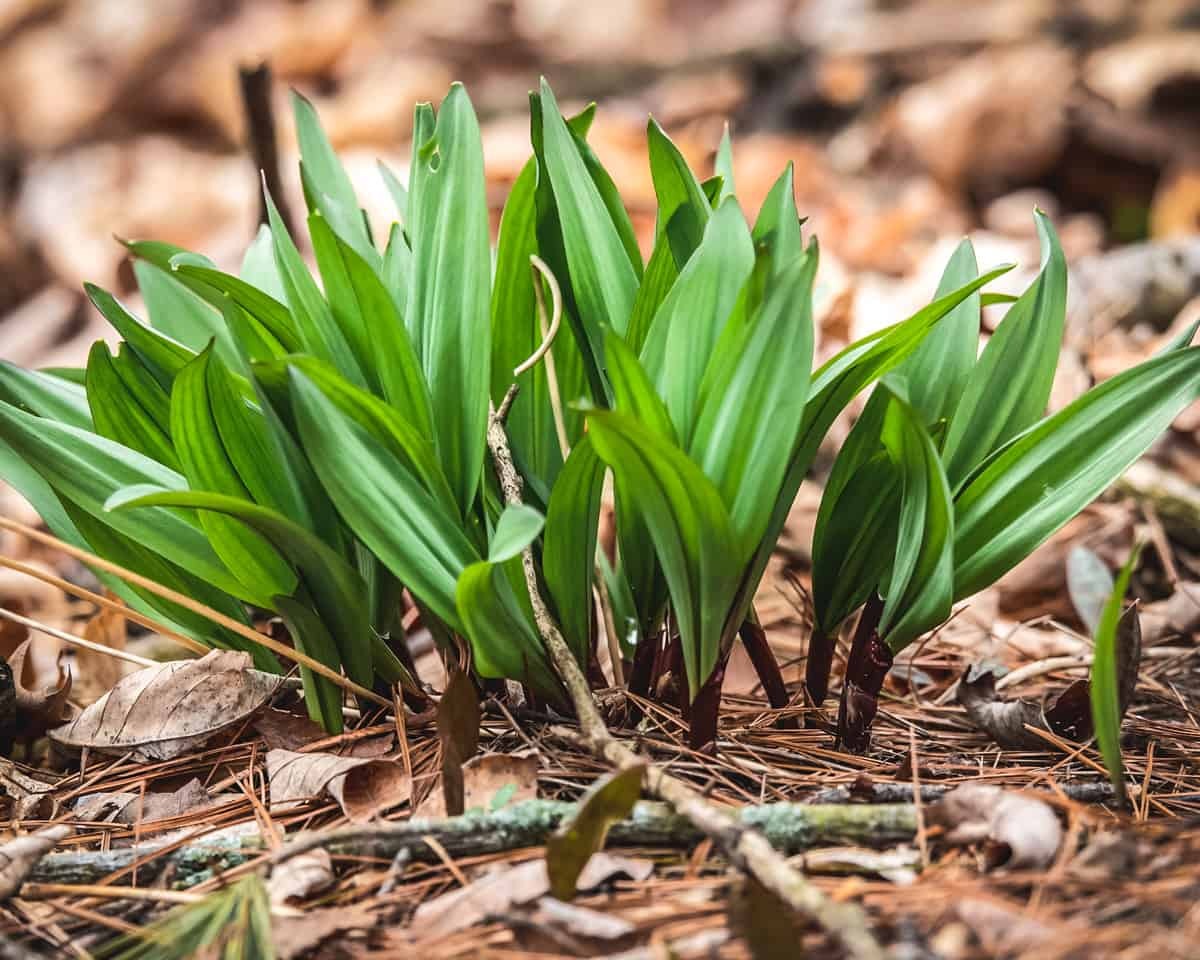
Ramps (Allium tricoccum), or wild leeks, have gained popularity in the mainstream culinary world in recent years, finding their way onto many gastropub menus in the form of "ramp butter" and other seasonal, regional dishes. These wild relatives of onions pack tons of yummy garlicky flavor and can be found all throughout the Northeastern United States, including in Maine! They tend to be the first plants to appear in spring (sometimes as early as March) and tend to grow in shaded areas near deciduous trees (maples, oaks, etc). Ramps spread very slowly, making responsible foraging crucial to preserving this wild edible wonder. Each Ramp plant only produces a single seed that can take up to 2 years to germinate into a viable plant. For this reason, you should only take the leaves of the ramp, and not dig up the entire bulb, while making sure to take a maximum of one leaf per each plant. Look for broad, flat, "tulip-shaped" or "blade shaped" leaves with a green matte finish, attached to a bulb in the ground by a burgundy stem. When pinched or crushed, the leaves should have a strong garlic onion aroma, distinguishing it from its poisonous lookalike, Lily of the Valley. If it doesn't smell strongly of onion or garlic, it is not a ramp, and caution should be exercised.
Conifer tips
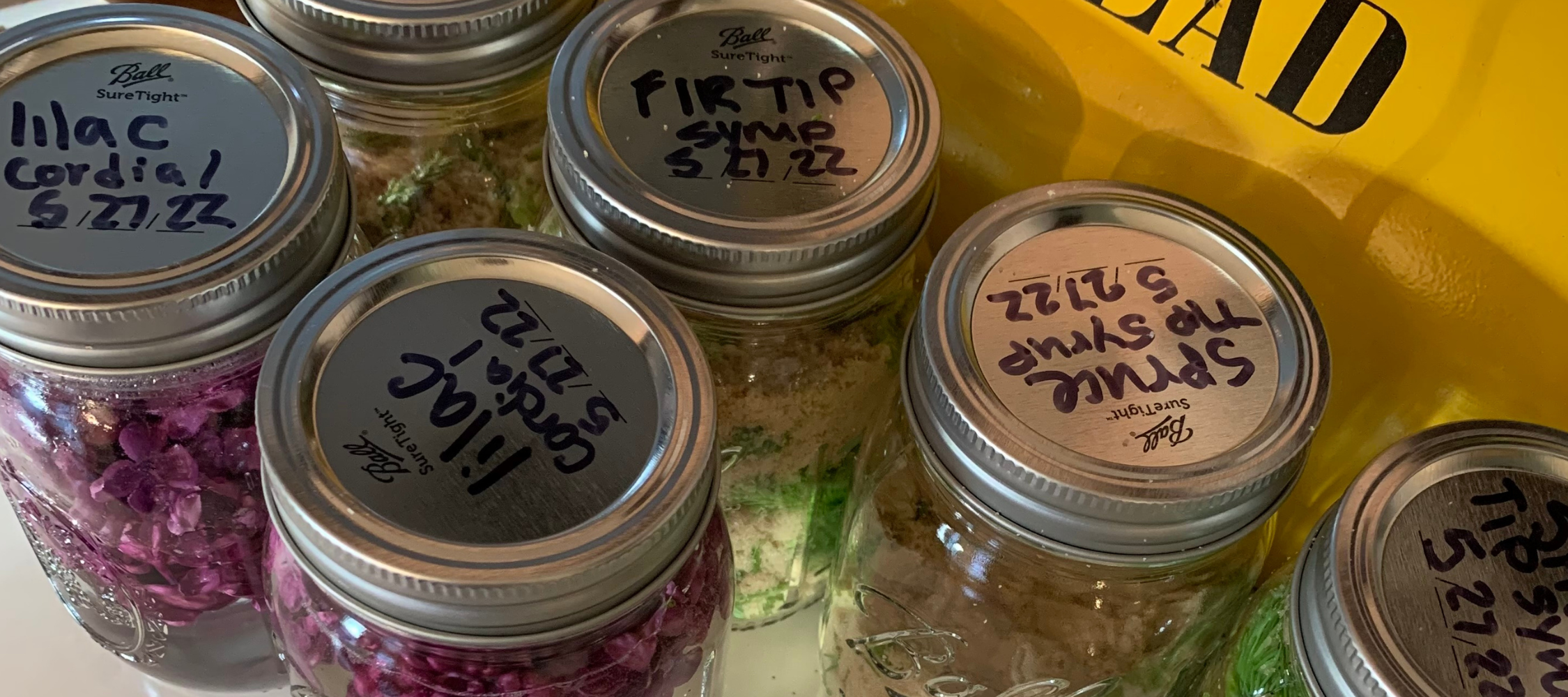
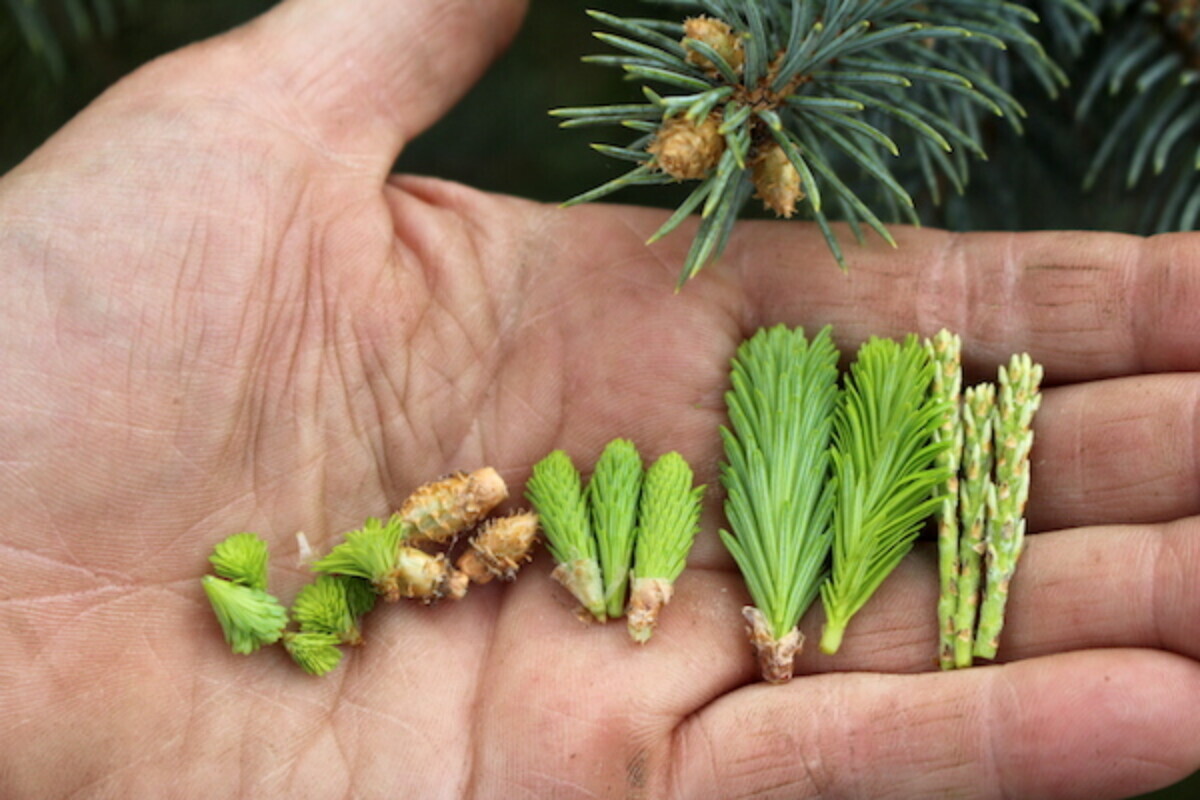
Here at Harbor Farm we don't just use balsam fir to make our wreaths! We also enjoy harvesting the fresh tips of the trees in spring to make into syrups, jellies, and to use in salads! Almost all conifer tree tips from Pine to Spruce (with the exception of the toxic yew tree) are edible, and they have a bright citrusy-piney flavor that lends itself well to many uses, both savory and sweet. Each tree variety has tips with a unique flavor, and learning to identify them will help you to make the best use of each flavor profile successfully, as well as avoiding potential toxic lookalikes. Look for Bright green, soft tips at the ends of branches of evergreens that may have bits of a papery brown coating on them, though they should be fully emerged and not coated competely. Conifer tip syrup is one of my favourite springtime projects and treats, but these tips also lend an herbal brightness to spring salads that is unique and unmistakably from the earth. Give it a try this spring!
Lilac Flowers
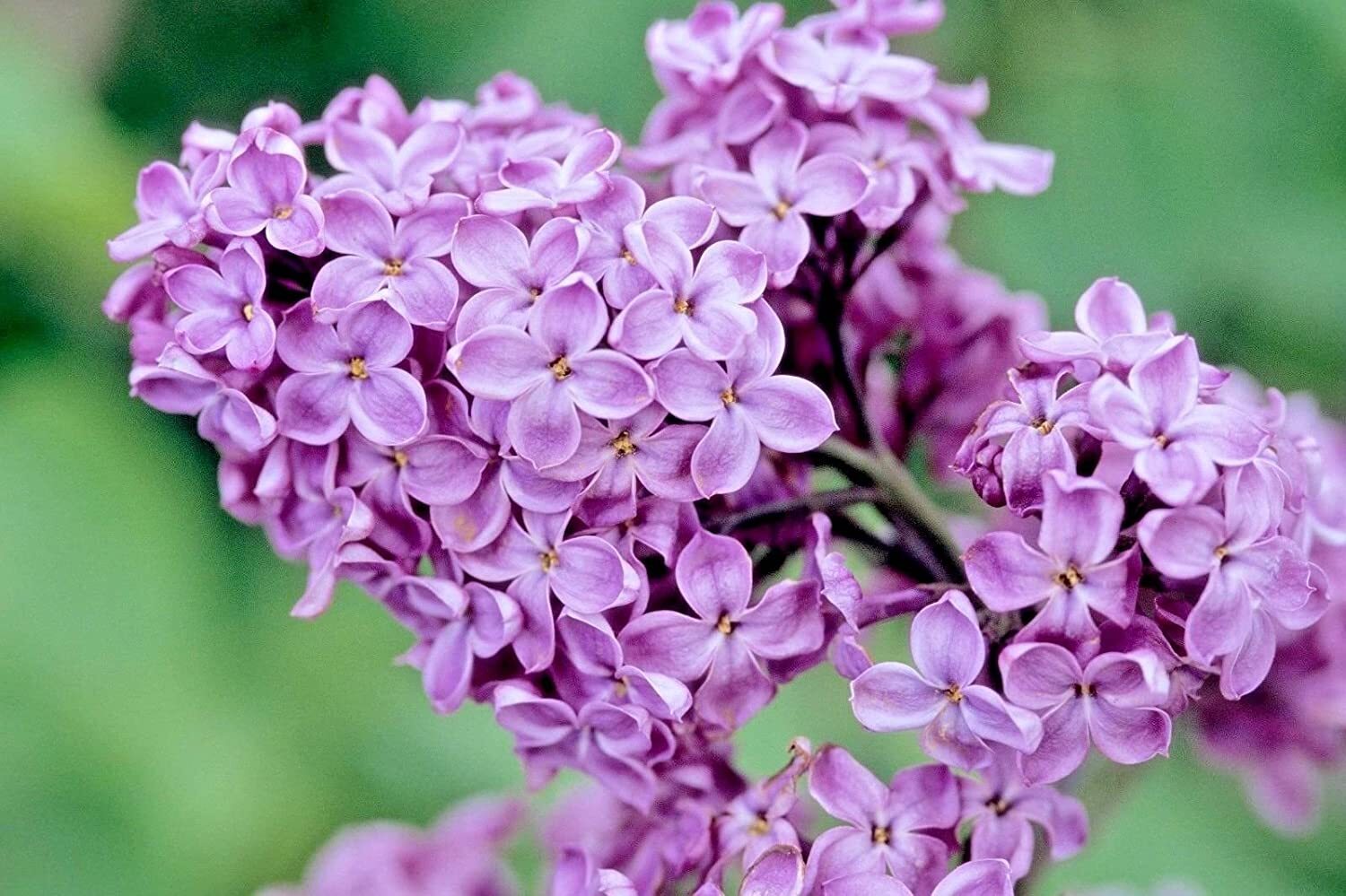
Nothing says spring in New England quite like the sweet, delicate smell of lilacs on the breeze. Lilac blossoms can be used to make syrups, teas or can be candied and eaten on their own or as ornaments on cakes and pastries. These light purple flowers are well known for their powerfully sweet aroma and the nice purple colour they lend to syrups and teas they're infused in. Make sure you remove all the green stems before culinary use, as they can be quite bitter and poor tasting, and can impact the final taste of your product. Look for woody, shrubby bushes or trees with smooth grey-brown bark, opposite and smooth, heart shaped leaves and purple or white flowers with 4 petals in grape-like clusters that smell strongly floral and sweet.
Fungi
Many people don't know how bountiful the forests of Maine truly are. The reality is, there are a ton of wild edible plants right beneath our feet, and all it takes is some knowledge to take advantage of nature's food! Fungi can get a bad rap, with many people fearful of them, due to a few toxic species that can really ruin your day if eaten, but harvesting wild mushrooms is a custom as old as time, and with a little skill, you can find some delicious foods right in your own backyard! Here are a couple of springtime mushrooms you can learn to identify and eat.
Morels
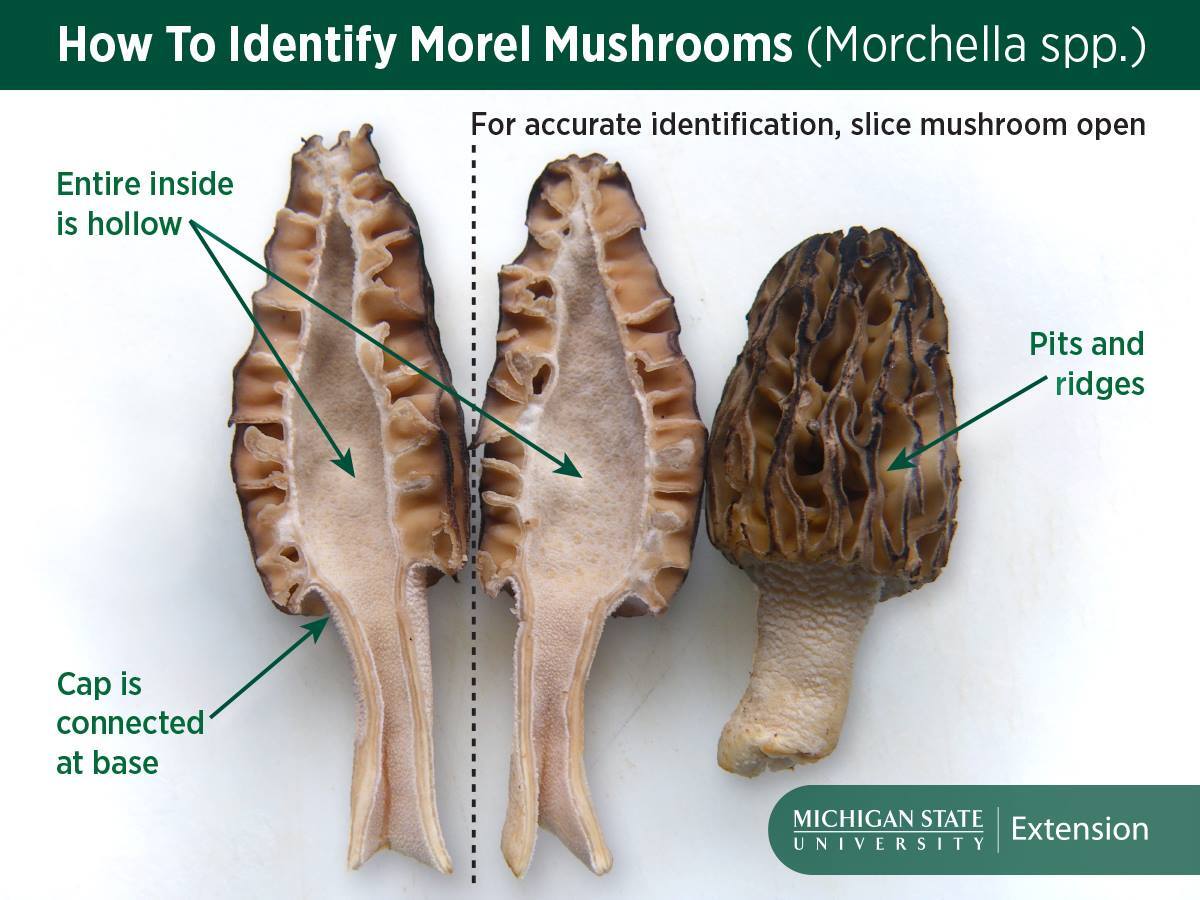
Morel mushrooms (genus Morchella) are a culinary delicacy that many mushroom foragers hunt for near obsessively. Their unique, woody, nutty flavor lends itself well to italian dishes like pasta or on top of pizza, but can also be battered and fried, or cooked in a number of other ways. Morels aren't very common in Maine, but can be found in oak and elm forests and apple orchards mostly in the southern region of the state in early May. Look for a "honeycomb" texture with pits and ridges on an elongated, uniformly shaped, convex cap that is yellow in colour with a pale yellow, or cream coloured stem that is completely hollow all the way through to the cap, which is fully attached to the stem. If it is irregular in shape, a darker red-brown, or not hollow all the way through it is most likely not a true morel. It could be a toxic lookalike, the false morel, and caution should be exercised. As a reminder, never consume mushrooms you can't identify with 100% certainty.
Spring Oyster Mushrooms
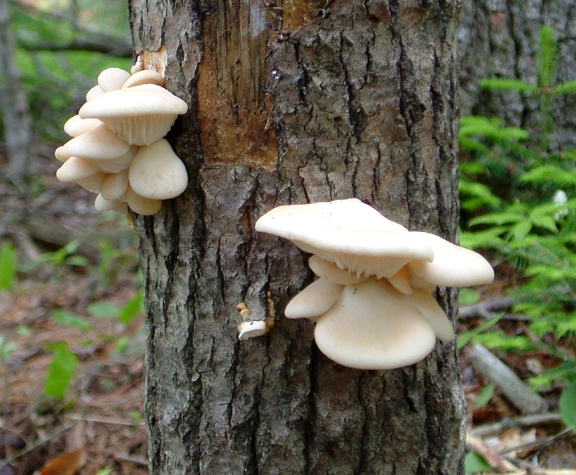
Spring oyster mushrooms (Pleurotus populinus) typically emerge on poplar in May-early June in Maine and are fairly easy to identify due to their sweet, anise-like aroma. Look for overlapping fan-like growth of white to greyish coloured caps on dead or dying trees and downed logs. They have close together "true gills" that attach to the stem and continue down it (decurrent). Another good identification point is to make a spore print-the Spring Oyster's print should be white. These are great used in stir fry, or any other dish you'd want a meaty-textured mushroom. Many avoid dehydrating them, as the reconsitututed texture is less than ideal and can be leathery or chewy.
Go Forth and Forage!
Foraging is a great activity to do with friends and family of all ages. While caution should be exercised, learning to identify wild edible plants and fungi is a skill everyone should learn, and can create a closer bond with nature and the land we call home. Before I close, I want to share some recommendations for resources to learn how to identify wild edibles in Maine and elsewhere. As a final reminder, never eat any wild plant or fungi that you aren't absolutely sure of. It is also best practice to avoid AI mushroom and plant identification apps or websites, as they are not always accurate and can result in false IDs, which can lead to grave consequences. When your health and life are involved, its best to leave the ID to human experts and peer-reviewed resources. Check out these guides to learn more, and happy foraging, friends!
Books
Northeast Foraging: 120 Wild and Flavorful Edibles from Beach Plums to Wineberries by Leda Meredith
Foraging New England by Tom Seymour
Foraging Mushrooms Maine by Tom Seymour
Mushrooming Without Fear: The Beginner's Guide to Collecting Safe and Delicious Mushrooms by Alexander Schwab
Websites
National Forest Service Website Field Guide on Macrofungi
Other Resources
Many locales have facebook groups dedicated to regional mushroom and plant identification, discussion, etc.
Reddit can also contain a wealth of information from experts and seasoned foragers. Always use caution when using unverified information, and make sure to independently verify all IDs each time.